Saturday, October 26, 2019

The foreign policy of the Democratic Party?

What is the prevailing foreign policy orientation of the USA's Democratic Party?

There are at least three major foreign policy models at play in American history.

Each model aims for peace in its own way.

Each also raises the potential for war.
  • Isolationism seeks avoidance of conflict with major powers (in Europe), even if this means preemptive military intervention in spheres of influence (e.g., Latin America).
  • Liberal internationalism seeks to build cooperation between nations by constructing international institutions (e.g., the United Nations), and seeks to advance liberal institutions throughout the world, often by military force.
  • Realism seeks to build peace by creating a balance of power, typically through diplomacy and the creation of alliances (that are ever-shifting and sometimes secret), and by undermining regionally and globally dominant players through military force.
Historically, conservatives in the USA are associated with isolationism and realism.

American liberals are associated with liberal internationalism.

But it gets complicated.

During the Cold War, the Republican Party largely adopted liberal internationalism as a framework to isolate the Soviet Union.

The late Senator John McCain was a liberal internationalist.

Within the Republican Party, neoconservatism represents a hybrid foreign policy.

Neoconservatives seek to impose democracy on the world. There is a consonance here with liberal internationalism.

But neoconservatives seek to do this without the support or construction of the international institutions that liberal internationalism espouses.

Neoconservatives also scorns the alliances that are central to realism.

There are Democrats who are neoconservatives. (Former Senator Joseph Lieberman was virtually an undeclared neoconservative.)

What is Donald Trump's foreign policy? As a person, Trump does not seem to have any interest in or knowledge of foreign policy. As a politician, Trump embraces a unilateral interventionist isolationism that appeals to his rural base.

One example is Trump's attack on a Syrian airbase in 2017 in the response to the Syrian government's use of chemical weapons in its civil war.

https://en.wikipedia.org/wiki/2017_Shayrat_missile_strike
On the morning of 7 April 2017,[1][8] the United States launched 59 Tomahawk cruise missiles from the Mediterranean Sea into Syria, aimed at Shayrat Airbase controlled by the Syrian government.[8][9][10] The strike was executed under responsibility of U.S. President Donald Trump, as a direct response to the Khan Shaykhun chemical attack that occurred on 4 April.[9][11 

The strike was the first unilateral military action by the United States targeting Ba'athist Syrian government forces during the Syrian Civil War.[11][12] Trump stated shortly thereafter, "It is in this vital national security interest of the United States to prevent and deter the spread and use of deadly chemical weapons."[13][14]
Trump stated after the US attack that the ultimate goal was to prevent a wave of refugees flowing out of Syria.

The method was interventionist (war in other societies), and the style was unilateral (no consultation with allies), but the objective was isolationist (keep foreigners out of the West).

Another of Trump's intentions was to differentiate himself from Barack Obama.

Obama warned Assad not to use weapons of mass destruction at the risk of US intervention. Yet when Assad used WMD, Obama did not retaliate. This reluctance to intervene goes against the realist emphasis on maintaining credibility.

Obama also publicly called for the overthrow of the Assad regime. Yet Obama never pursued that goal. This goes against liberal internationalism.

So what exactly was Obama's foreign policy orientation?

A list of public responses on NPR immediately following Trump's attack on Syria include:
  • a liberal journalist said that she was so overjoyed by the attack on the Assad government that she cried (liberal internationalists want to overthrow tyrants)
  • a liberal senator decried the attack, saying that diplomacy and not war should be the first recourse to conflict (liberal internationalists want cooperation)
  • a conservative senator said that at long last, after years of Obama's promising retaliation without delivering, the USA had regained its credibility (realism)
  • a conservative commentator said the the USA has no business fighting other people's wars (isolationism)
Where does Obama fit into these perspectives?

In his rhetoric, Obama seems to touch on all of them at his convenience.

In terms of consistency, Obama's focus seems to be on polishing his public image.

During the Arab Spring of the early 2010s, the Obama administration worried about the fate of the dictator of Egypt, Mubarak, who was an American ally. The general feeling among the Obama cabinet was that the USA should support Mubarak in order to shore up American credibility with its allies and as a bulwark against the rise of extremism in the Arab world. This is realism.

However, Obama turned against Mubarak. If Obama supported a dictator, he asked his cabinet, "What will young people around the world think of me?"

Obama's staff found this disturbing. Barack Obama was not trying to remain an honest man clinging to his idealism by opposing a dictator. This was Obama the politician trying to maintain the facade of himself as as an idealist at the expense of US foreign policy.

Obama's cynical preoccupation with appearing to be idealistic while being can be found early in his first presidential campaign.

When Obama first emerged as a contender for the presidency in 2008, the conservative columnist David Brooks liked what he saw. Brooks declared that Obama is the "ultimate realist". Obama, Brooks said, was not really a liberal pursuing social justice. Obama is really a progressive in the sense of the progressive movement of a century ago, which sought to promote rational public policy (as opposed to the usual negotiation and backroom dealings).

https://en.wikipedia.org/wiki/Progressivism

Not long after that, however, Brooks rescinded his approval of Obama. Obama, Brooks said, was willing to sacrifice anything to win the election. At the end of the day, Brooks asserted, one must believe in something.

Barrack Obama manifests a cynical ambition that disguises itself as idealism.

(It is no accident that "House of Cards" became a hit during the second Obama administration.)
There is thus a striking continuity between Obama and Trump that tells us something about the era and the country that we live in.

That being said, Obama is also a thoughtful, analytic, reflective man with a first-class intellect who took his terrible responsibilities seriously.

Below the lofty rhetoric, what kind of foreign policy orientation does one find in Obama?
Obama has been described as a "reluctant realist" in his foreign policy.

https://www.newyorker.com/news/john-cassidy/what-sort-of-foreign-policy-hawk-is-hillary-clinton
While he isn’t averse to using deadly force—witness the drone-assassination program—he is extremely wary of being drawn into extended military campaigns. One of Obama’s intellectual inspirations, Goldberg informs us, is Brent Scowcroft, the foreign-policy realist who served as George H. W. Bush’s national-security adviser. (In a post in 2014, after Obama gave a big speech at West Point, I described the President as “a reluctant realist.”)
Obama was reluctant to involve the USA in conflicts that he thought did not involve vital American interests. This is evident in his decision not to strike against the Assad government after they used chemical weapons, despite his promise to do so.
Goldberg’s piece takes up Obama’s thinking about Syria in some depth, and specifically the decision, in 2013, not to bomb President Bashar al-Assad’s forces after U.S. intelligence agencies concluded that Syria had used chemical weapons against rebel forces—an action that Obama had previously said would draw a strong U.S. response. “Syria, for Obama, represented a slope potentially as slippery as Iraq,” Goldberg writes. Obama was also unnerved by the fact that the British Parliament had voted against military action in Syria. He feared possible civilian casualties, and was aware that a retaliatory missile strike wouldn’t eliminate Assad’s chemical weapons. Moreover, he didn’t believe that Syria’s civil war threatened vital U.S. interests.
Obama is a realist focused on America's interest, not on ideology. Obama is not interested in propagating democracy around the world.

But Obama's realism is at odds with the realism that has comprised the policy making of the establishment for decades.

Mainstream realism asserts that one must always back up a promise once one has made it.
If you're gonna talk the talk, you gotta walk the walk.

Hillary Clinton subscribes to this old-school realism.
Obama’s U-turn on Syria infuriated some of America’s Arab allies, and it alarmed some U.S. officials and former officials, who believed that it damaged the credibility of the United States. Goldberg quotes Leon Panetta, who served under Obama as C.I.A. director and Secretary of Defense, to this effect. He also reports that Clinton, who by the summer of 2013 had left the State Department, agreed with the critics of Obama’s decision. “If you say you’re going to strike, you have to strike. There’s no choice,” she remarked privately.
Hillary Clinton is a prototypical liberal Democrat in domestic policy.

But HRC is an old-fashioned realist in foreign policy. She is essentially a foreign-policy conservative. (This would make her the exact opposite of John McCain, who was a foreign policy liberal but a conservative in domestic policy.)

HRC is very much a realist in foreign policy, but to what extent is that brand of hard realism outdated?

The Middle East is of vital interest to the USA, but not in the same way that it was during the Cold War. During the Cold War the threat of direct Soviet intervention was real and looming.

Places like the Middle East and Central America may still be crucial to American security. But they are no longer "hot spots" that could suddenly explode and lead to world war.

So Barack Obama does have valid concerns about the conventional playbook of US foreign policy that so often calls for military action as a response to aggression.

That is, without the USSR around, that aggression may not actually endanger the USA.
In making this statement, Clinton was echoing a foreign-policy playbook that has ruled Washington for decades, and that Obama told Goldberg he was proud to have broken with. “The playbook prescribes responses to different events, and these responses tend to be militarized responses,” the President said. “Where America is directly threatened, the playbook works. But the playbook can also be a trap that can lead to bad decisions.” Inside the White House, Goldberg reports, Obama went further, arguing that “dropping bombs on someone to prove that you’re willing to drop bombs on someone is just about the worst reason to use force.”
On the other hand, Obama did promise retaliation in Syria if the Assad regime used WMD, and Obama failed to retaliate when Assad did just that.

Also, at some point, Obama mentioned that Assad should be overthrown.

Those were two obvious and significant mistakes on Obama's part.


But Obama is still a 21st-century realist.

Wednesday, October 23, 2019

Models of US foreign policy over time and space

There are at least three major models at play in American foreign policy.
US foreign policy over time
These foreign policy paradigms have each been dominant at certain periods in history.
Isolationism
Isolationism has had a deep, formative influence on the American outlook.

Early on, isolationism had been the dominant model.

Isolationism was the ascendant American foreign policy model throughout the 19th century and between the two world wars.

https://en.wikipedia.org/wiki/Isolationism
Isolationism is a category of foreign policies institutionalized by leaders who assert that nations' best interests are best served by keeping the affairs of other countries at a distance. One possible motivation for limiting international involvement is to avoid being drawn into dangerous and otherwise undesirable conflicts. There may also be a perceived benefit from avoiding international trade agreements or other mutual assistance pacts.
One argument is that Americans were never really isolationist. That is, Americans never had a reluctance to intervene in the affairs of other states (e.g., Latin America).

What Americans had a distaste for was getting enmeshed in alliances. Alliance can get countries involved in wars not of their choosing.
While some scholars, such as Robert J. Art, believe that the United States has an isolationist history, other scholars dispute this by describing the United States as following a strategy of unilateralism or non-interventionism instead.[11][12] Robert Art makes his argument in A Grand Strategy for America (2003).[11] Books that have made the argument that the United States followed unilaterism instead of isolationism include Walter A. McDougall's Promised Land, Crusader State (1997), John Lewis Gaddis's Surprise, Security, and the American Experience (2004), and Bradley F. Podliska's Acting Alone (2010).[13] Both sides claim policy prescriptions from George Washington's Farewell Address as evidence for their argument.[11][12] Bear F. Braumoeller argues that even the best case for isolationism, the United States in the interwar period, has been widely misunderstood and that Americans proved willing to fight as soon as they believed a genuine threat existed.[14] 
"Events during and after the Revolution related to the treaty of alliance with France, as well as difficulties arising over the neutrality policy pursued during the French revolutionary wars and the Napoleonic wars, encouraged another perspective. A desire for separateness and unilateral freedom of action merged with national pride and a sense of continental safety to foster the policy of isolation. Although the United States maintained diplomatic relations and economic contacts abroad, it sought to restrict these as narrowly as possible in order to retain its independence. The Department of State continually rejected proposals for joint cooperation, a policy made explicit in the Monroe Doctrine's emphasis on unilateral action. Not until 1863 did an American delegate attend an international conference."
The Doctrine opposes European colonialism in the western hemisphere.

The Doctrine also repudiates American interference in European affairs.

https://en.wikipedia.org/wiki/Monroe_Doctrine
The Monroe Doctrine was a United States policy of opposing European colonialism in the Americas beginning in 1823. It stated that further efforts by European nations to take control of any independent state in North or South America would be viewed as "the manifestation of an unfriendly disposition toward the United States."[1] At the same time, the doctrine noted that the U.S. would recognize and not interfere with existing European colonies nor meddle in the internal concerns of European countries.
The Monroe Doctrine highlights a certain moral ambiguity in American foreign policy. Toward Europe, the Monroe Doctrine is anti-imperialist. But in the eyes of Latin Americans, the Doctrine is a form of American imperialism.

But there is another dualism expressed in the Monroe Doctrine. On the one hand, the methods of Monroe Doctrine are unilateralist. The American attitude is typically "We don't need no stinking allies."

https://en.wikipedia.org/wiki/Unilateralism
Unilateralism is any doctrine or agenda that supports one-sided action. Such action may be in disregard for other parties, or as an expression of a commitment toward a direction which other parties may find disagreeable. It stands in contrast with multilateralism, the pursuit of foreign policy goals alongside allies.
On the other hand, the objective of the Monroe Doctrine is isolationist. Europeans should stay out of the affairs of the western hemisphere and, in return, Americans would not get involved in the affairs of Europe.

The second half of this formulation would change in the 20th century.
Liberal internationalism
With the First World War, the US embarked in a foreign policy of "liberal internationalism".
The USA would intervene in the world in order to promote liberal values.

https://en.wikipedia.org/wiki/Liberal_internationalism
Liberal internationalism is a foreign policy doctrine that argues that liberal states should intervene in other sovereign states in order to pursue liberal objectives. Such intervention can include both military invasion and humanitarian aid. This view is contrasted to isolationist, realist, or non-interventionist foreign policy doctrines; these critics characterize it as liberal interventionism.
The focus of liberal internationalism is on international cooperation and on the construction of international institutions.
The goal of liberal internationalism is to achieve global structures within the international system that are inclined towards promoting a liberal world order. To that extent, global free trade, liberal economics and liberal political systems are all encouraged. In addition, liberal internationalists are dedicated towards encouraging democracy to emerge globally. Once realized, it will result in a 'peace dividend', as liberal states have relations that are characterized by non-violence, and that relations between democracies is characterized by the democratic peace theory.
Liberal internationalism states that, through multilateral organizations such as the United Nations, it is possible to avoid the worst excesses of "power politics" in relations between nations.
When Americans think of foreign policy, they tend to alternate between isolationism and liberal internationalism.

On the one hand, Americans get frustrated with a complicated violent world and just want to "Bring all the troops home!" On the other hand, Americans recall the righteous glory of the Second World War as the high point of American history.

This ambivalence might reflect America's Christian heritage.

The Puritans escaped to the wilderness from a corrupt civilization and sought to transform that wilderness into a paradise.

The escape from corruption resonates with the Catholic monastic ideal. The will to purify society resonates with Protestantism (which contains Catholicism within its DNA).

https://en.wikipedia.org/wiki/City_upon_a_Hill

https://en.wikipedia.org/wiki/The_Mosquito_Coast

In the wake of the Vietnam war, liberal internationalism began to disintegrate. This led to the ascendance in the 1970s of a paradigm of international relations that Americans do not intuitively understand.
Realism salvaged limited intervention.
The focus of realism in foreign policy is on power as opposed to ideology.

Realism emphasizes the pursuit of peace through the creation of a balance of power.

Peace is attained through diplomacy and the formation of dynamic alliances (sometimes secret alliances) as opposed to creating cooperative international institutions.

https://en.wikipedia.org/wiki/Balance_of_power_(international_relations)
The balance of power theory in international relations suggests that states may secure their survival by preventing any one state from gaining enough military power to dominate all others.[1] If one state becomes much stronger, the theory predicts it will take advantage of its weaker neighbors, thereby driving them to unite in a defensive coalition. Some realists maintain that a balance-of-power system is more stable than one with a dominant state, as aggression is unprofitable when there is equilibrium of power between rival coalitions.
The embodiment of foreign policy realism would be Dr. Henry Kissinger.

Kissinger cultivated a celebrity status in the 1970s in order to secure his own place in the power structure. In fashioning himself as a celebrity diplomat in the 1970s, Kissinger burnished realism with an idealistic shimmer.

For example, John Adams, the composer of the opera "Nixon in China", once stated that it is ironic that a liberal such as himself would fully approve of Nixon's diplomatic recognition of communist China.

From a realist perspective, however, the USA's normalization of relations with China in the 1970s was part of an attempt to pivot China against the Soviet Union ("triangulation").

Liberals often seem to imagine that Nixon and Kissinger were suddenly overcome by idealistic impulses when they began their secret negotiations with China.

Everyone else in the world can see that Nixon was conspiring with China in order to create a balance of power favorable to the USA (and to China) at the expense of the Soviets.

In the USA, Kissinger is also reviled for his "ruthlessness".

["The Trials of Henry Kissinger", 2002, trailer]


https://www.youtube.com/watch?v=Qxe4XomNEpc
Americans do not understand Henry Kissinger because Americans fundamentally do not understand foreign policy realism.

This is a historically unique situation. In fact, it is freakish.

With the exception of the USA, the foreign policy of every country in the world is based on realism. In contrast, Americans alternate between wanting to transform the world into a democracy and desiring to withdraw behind their borders.
Offshore balancing of power as realism
Another example of realism is found in "offshore balancing of power".

In this strategy, rather than be a "global policeman" (as liberals would desire), US forces would largely withdraw from regions of vital importance. Such regions for the USA include Europe, the Middle East, Northeast Asia. Instead, the US would support local powers who oppose any one regional power from becoming dominant.

https://en.wikipedia.org/wiki/Offshore_balancing
Offshore balancing is a strategic concept used in realist analysis in international relations. It describes a strategy in which a great power uses favored regional powers to check the rise of potentially-hostile powers. This strategy stands in contrast to the dominant grand strategy in the United States, liberal hegemony. Offshore balancing calls for a great power to withdraw from onshore positions and focus its offshore capabilities on the three key geopolitical regions of the world: Europe, the Persian Gulf, and Northeast Asia.
In terms of the Middle East, the prime example of offshore balancing of power was the Iran-Iraq War.

The USA supported Iraq -- the losing side -- against a revolutionary Iran that was hostile to the USA. The balancing of power can involve supporting the weaker party in a regional conflict because the objective is to reduce the power of the strongest party in order to stabilize the region. There is no shame here of spending money on the losing side.
According to political scientist John Mearsheimer, in his University of Chicago "American Grand Strategy" class, offshore balancing was the strategy used by the United States in the 1930s and also in the 1980–1988 Iran-Iraq War. Mearsheimer argues that when the United States gave Lend-Lease aid to Britain in the 1940s, the United States engaged in offshore balancing by being the arsenal of democracy, not the fighter for it.
That is consistent with offshore balancing because the US initially did not want to commit American lives to the European conflict. The United States supported the losing side (Iraq) in the Iran–Iraq War to prevent the development of a regional hegemon, which could ultimately threaten US influence. Furthermore, offshore balancing can seem like isolationism when a rough balance of power in international relations exists, which was the case in the 1930s. It was also the strategy used during the Cold War between the United States and Soviet Union.
Unfortunately, sometimes it is not possible to utilize local proxies in a conflict. Sometimes a great power needs "onshore" presence in the region to support proxies. Sometimes it is necessary to use one's own troops to maintain a balance of power.

The US military's presence in Syria backing of the Kurdish SDF is a case of such onshore balancing of power. The motto of balance-of-power realism might be "My enemy's enemy is my friend." The Kurds are the enemies of the Islamic State, which is the USA's enemy.

Trump's betrayal of the Syrian Kurds is an example of a re-emergent isolationism masquerading as offshore balance-of-power realism.
Foreign policy models applied to space
Prescriptively, it might be useful to limit the application of each of the three models -- isolationism, liberal internationalism, realism -- to particular contexts. That is, each model has its own validity depending on the region in which it is applied. This attitude might help to promote stability and reduce discord in foreign policy decision-making.
The USA zigzags in its foreign policy.
Depending on the course of international events, public discourse the USA alternates between foreign policy models of isolation and liberal internationalism.

In 1993 the US military mounted an operation to arrest a warlord in order to end a famine in Ethiopia. This is a case of liberal internationalism. It led to the Battle of Mogadishu ("Blackhawk Down").

https://en.wikipedia.org/wiki/Operation_Gothic_Serpent

In the aftermath, there was a public backlash against US involvement in the affairs of other countries. Isolationism was (re-)embraced.

A year later in Rwanda, between half-a-million to one million people were murdered in a genocide campaign.

https://en.wikipedia.org/wiki/Rwandan_genocide

From this trauma, there emerged a sense that there is a moral obligation to intervene in catastrophic conflicts. Liberal internationalism was (re-)affirmed.

Rwanda's genocide was the deep psychological background to the American invasion of Iraq. Realists wanted to replace Saddam Hussein with the Iraqi military, whereas liberals and neoconservatives saw the invasion as the first step in the democratization and economic transformation of the Middle East.

Rather than zigzag in foreign policy from one model to another, it might be better to assign particular models to particular geographies.

That is, rather than subscribe to one foreign policy model that would be applied universally, each of the above models might apply better to particular geopolitical contexts.
Liberal internationalism applies only to advanced democracies
The first lesson of the European Union is that the joining of nations is facilitated when those countries actually have something in common culturally, and if they are at comparable levels of economic development. The EU might be a perpetual time bomb that will explode whenever there is a major crisis in Europe.

The second lesson is that integration should grow organically and not be accelerated.

This first lesson might be applied to the application of liberal internationalism. Cooperative institutions have their limits. However, once those limits are identified, opportunities for integration emerge.

One example would be to extend NAFTA to economically developed English-speaking countries. Over the generations, the Anglosphere could evolve into a loose confederation.

https://en.wikipedia.org/wiki/Anglosphere

Likewise, liberal internationalism would be applied to economically advanced democracies.

https://en.wikipedia.org/wiki/OECD

Economically developed nations:

https://en.wikipedia.org/wiki/Developed_country


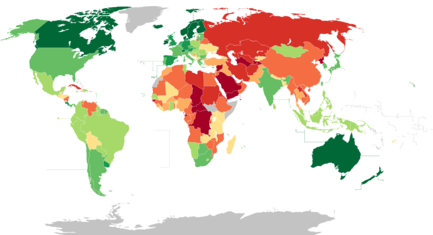
Countries by their level of democracy:

https://en.wikipedia.org/wiki/Democracy_Index


Liberal internationalism best applies to the countries that are both blue and green, not to any of the others.
The realm of realism
Realism might also be applicable to countries above that are either blue (developed) or green (democratic), but not both.

For example, NAFTA might be understood as an example of liberal internationalism insofar as a free-trade zone is an international framework of cooperation. By that measure, as a developing country, Mexico does not belong in NAFTA. Mexico belongs in the realm of realist policy, not liberal international cooperation.

However, realist foreign policies would apply to regions of vital American interest even if they are neither economically developed nor democratic.

This describes the Middle East (Syria). There are grounds for military intervention in the Middle East, but not for the formation of cooperative institutions that further liberal values in that region.
The realm of isolationism
The USA has no business in poor, undemocratic societies outside areas of vital American interest (e.g., the Middle East and Latin America).


For example, the USA should not intervene in Ethiopia or Rwanda, regardless of the level of tragedy that might afflict those countries. However, the USA should intervene with realist policies for South Africa, because South Africa is a semi-developed democracy.

Wednesday, October 9, 2019

>>>Postcript: Upzoning strategies & seniors in suburbs

Postscript: a reconsideration

First, the bad news.

As of late 2019, about three-quarters of the USA is now "housing unaffordable" for average wage earners.

https://www.ft.com/content/7fa4fadc-e67d-11e9-b112-9624ec9edc59

The good news in October of 2019 is that the price of luxury apartments is plummeting.
The prices of luxury apartments in Manhattan are falling for the first time in 10 quarters, and it’s the fastest annual drop since 2011, according to Miller Samuel, a New York-based real estate consultant. 

At the same time, the commercial market, which has been in a bubble for some time, is finally deflating. US Federal Reserve officials have been saying for some time that the commercial market was overheated, even as US banks have made $700bn worth of commercial real estate loans since 2012. 

You could argue that some deflation would be healthy — according to a recent Goldman Sachs report, commercial real estate prices in New York are now 42 per cent above 2007 levels and 108 per cent above post-recession lows.
The even better news is that building luxury apartments -- or building anything, for that matter -- brings down the cost of real estate. In terms of footprint, a $138 million Manhattan condominium takes up less space than a $138 million mansion. Moreover, simply building new luxury housing puts more housing supply on the market, enabling ordinary home buyers to move up a notch. This is known as "filtering".
The promise and perils of filtering
According to the theory of filtering, as luxury homes go onto the market for the first time or become more affordable -- and if people actually live in luxury housing, rather than just purchase it for prestige or as an investment -- the rest of society can move up into vacated homes. Middle class people can move up into upper-middle class homes, and lower-middle class folks can move on up into vacated middle-class homes. So perhaps the collapse of high-end urban real estate markets will give a lift to prospective homebuyers.

Filtering might suggest a useful strategy in the face of the resistance of affluent communities to inclusive zoning. Wealthy people in affluent suburbs do not want public housing for poor people in their neighborhoods. (To be fair, even poor people do not want to live near poor people, at least not newcomers.) In order to exclude poor people who would be living in small, high-density apartments, affluent communities zone for only big houses on big lots (and a slew of other tricks, like requiring certain architectural flourishes). These zoning regulations have the added effect of taking even more land out of the potential housing supply.

As a compromise, the strategy to deal with this would be to require high-density luxury housing -- luxury apartments, townhouses or duplexes -- in affluent neighborhoods. That is, the initiative would not be to install high-density affordable housing in affluent neighborhoods, but there would still be a push for high-density. For those in affluent neighborhoods, home prices and quality of life would not be hurt or lost with this reform. In fact, if it was required that the new smaller houses and apartments in such areas would be self-sufficient in terms of energy production and wastewater treatment, and this increased the cost of the units, this would be considered an asset by the community because for them it's all about keeping prices high. For the rest of society, the creation of high-density luxury housing would lead to the trickle-down effect of more housing.

The problem with filtering is that it is limited. The new luxury housing stock does not have a trickle down effect for people at or near the bottom. That is, when luxury houses go on the market, the working class does does not necessarily move up into newly vacated lower-middle class homes, nor do the working poor move up into working class neighborhoods.

So a second idea would be to replace the mandate for low-income housing with the promotion of middle-income housing.

More specifically, half the high-density housing mandated in an area would be for the income group just below the income level of the area to be upzoned.

Again, it would be a compromise with current initiatives that displease everyone. (Do poor people without reliable cars really want to live in affluent neighborhoods that have no mass transit, and where the only grocery stores are unafforable even to the middle class?)

This second suggestion suffers from a flaw. It's too complicated and seems arbitrary. In this light, the preceding suggestion -- that inclusive zoning should focus on creating high-density housing that would be priced for the income of the area -- likewise seems belabored.
Seniors in the suburbs? Just leave them be.
The third idea was to build apartments for seniors in the suburbs where they now live alone in big houses among the detritus of knickknacks and furniture accumulated over a lifetime. Seniors would be encouraged to downsize and move into these apartments for their own financial well-being, as well as to help open up the housing market for young families. This would be accomplished by offering seniors outrageous housing subsidies and tax breaks (e.g., no capital gains tax on home sales if they move into an apartment). Seniors who would balk at moving to apartments in the city might agree to live in apartments in their hometown. This idea was thus a compromise.

In retrospect, this policy proposal seems too complicated, officious and inhumane. It might be better to just let people be happy living in their memories. After all, memories are all that we will have at some point in our lives, and a house for seniors is literally a "memory palace". Also, it is largely futile. The fact of the matter is that most seniors will not downsize and move, no matter how much we bribe them.

There is another issue that might be even more important than housing affordability.
When policy proposals become too convoluted, it might be time for a total rethink.
"Weird science" and "adding epicycles"
This brings to mind a famous maxim:

The simplest solution is not necessarily the best solution, but the best solution is usually characterized by its simple elegance.

This maxim is related to Occam's razor.

https://simple.wikipedia.org/wiki/Occam%27s_razor
Occam's razor (or Ockham's razor) is a principle from philosophy. Suppose there exists two explanations for an occurrence. In this case the one that requires the smallest number of assumptions is usually correct. Another way of saying it is that the more assumptions you have to make, the more unlikely an explanation. Occam's razor applies especially in the philosophy of science, but also more generally.
Another issue is "weird science".

There is a typical way of doing business in any endeavor. In science, the standard framework of conducting research is a "paradigm". Paradigms become obsolete. Long after a paradigm is established, all sorts of anomalies crop up in the data. This forces scientists to try new things and challenge the prevailing scientific understanding.

https://en.wikipedia.org/wiki/Paradigm_shift#Original_usage
Extraordinary research – When enough significant anomalies have accrued against a current paradigm, the scientific discipline is thrown into a state of crisis. To address the crisis, scientists push the boundaries of normal science in what Kuhn calls “extraordinary research”, which is characterized by its exploratory nature.[6] Without the structures of the dominant paradigm to depend on, scientists engaging in extraordinary research must produce new theories, thought experiments, and experiments to explain the anomalies. Kuhn sees the practice of this stage – “the proliferation of competing articulations, the willingness to try anything, the expression of explicit discontent, the recourse to philosophy and to debate over fundamentals” – as even more important to science than paradigm shifts.
At first, there are attempts to salvage the current worldview by creating a more elaborate version of that worldview.

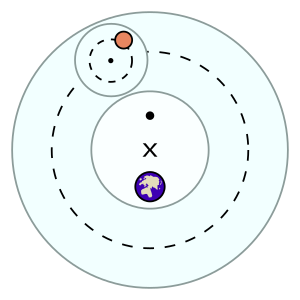
An example of this would be the concepts of "epicycles", "deferents", "equants" and "eccentrics" in the geocentric model of the cosmos. These concepts were developed to explain irregularities in the movements of heavenly bodies like the Sun around the Earth.

https://en.wikipedia.org/wiki/Deferent_and_epicycle

Likewise, creating more elaborate models of inclusive zoning might be a sign that the paradigm of zoning might be intellectually bankrupt and/or exhausted.
A new paradigm: Beyond zoning
It has been asserted by some that zoning in general does not make sense, even though it is an intuitive solution and the conventional practice. But nobody knows what else to do.

In any case, inclusive zoning might be banned in the near future.

https://www.citylab.com/equity/2019/10/supreme-court-inclusionary-zoning-constitutional-takings-clause/596863/

So what is to be done?

One touchstone of good planning is that policy should aim to create self-organizing systems.

In a self-organizing system, a few rules or a small set of stimuli compel individuals who possess local autonomy and who interact with one another to respond to challenges by creating order spontaneously.

https://en.wikiquote.org/wiki/Self-organizing_systems
Self-organizing systems are structures that process where some form of overall order or coordination arises out of the local interactions between smaller component parts of an initially disordered system. The process of self-organization can be spontaneous, and it is not necessarily controlled by any auxiliary agent outside of the system. It is often triggered by random fluctuations that are amplified by positive feedback. The resulting organization is wholly decentralized or distributed over all the components of the system.
Donald Shoup's parking policy proposals is exemplary in terms of promoting self-organization at the street level.

Shoup's three recommended parking reforms are simple rules that promote spontaneous self-organization.
  • Remove off-street parking requirements. Developers and businesses can then decide how many parking spaces to provide for their customers.
  • Charge the right prices for on-street parking. The right prices are the lowest prices that will leave one or two open spaces on each block, so there will be no parking shortages. Prices will balance the demand and supply for on-street spaces.
  • Spend the parking revenue to improve public services on the metered streets. Because everybody will see their meter money at work, the new public services can make parking meters politically popular.
Shoup's three recommendations serve as a model for zoning reform.
  • Eliminate zoning. As inclusive zoning becomes a fraught process, it might be best to find a way around zoning altogether.
  • Charge progressively tiered fees on real estate. Big houses on big lots that are under-occupied (or even unoccupied) impose negative externalities on the rest of society by driving up land prices and wasting resources.
  • Distribute revenues equally. Revenues would be collected at the state level and divvied up to the counties on a per capita basis. More administrative functions would be devolved to the counties.
These revenues might be seen as fees rather than taxes, but this program might be seen as a type of tax reform.
The semi-futility of reform
New ideas can be exciting, but it is best to keep in mind the fate of certain tax reforms.
In the 1990s, along with cutting spending and raising taxes, the Clinton administration raised revenues by eliminating deductions and exemptions from the tax code.

https://en.wikipedia.org/wiki/Economic_policy_of_the_Bill_Clinton_administration
In proposing a plan to cut the deficit, Clinton submitted a budget and corresponding tax legislation that would cut the deficit by $500 billion over five years by reducing $255 billion of spending and raising taxes on the wealthiest 1.2% of Americans.[5] It also imposed a new energy tax on all Americans and subjected about a quarter of those receiving Social Security payments to higher taxes on their benefits.
Clinton signed the Omnibus Budget Reconciliation Act of 1993 into law. This act created a 36 percent to 39.6 percent income tax for high-income individuals in the top 1.2% of wage earners. Businesses were given an income tax rate of 35%. The cap was repealed on Medicare. The taxes were raised 4.3 cents per gallon on transportation fuels and the taxable portion of Social Security benefits were increased.
This pattern of raising taxes and cutting spending (i.e., austerity) in an economic boom coincides precisely with the advice of John Maynard Keynes, who stated in 1937: "The boom, not the slump, is the right time for austerity at the Treasury."
Clinton's austerity regime helped to drive down the national debt.

https://upload.wikimedia.org/wikipedia/commons/b/b8/US_Federal_Debt_as_Percent_of_GDP_by_President.jpg

Image result for national debt graph by president
Over time, wealthy Americans made the quasi-Keynesian argument that removing tax breaks for the wealthy slowed down the economy and hurt the working class. The rich eventually got back their tax breaks on yachts and mansions.

In fact, tax cuts for the wealthy came back with a vengeance.

https://www.nytimes.com/interactive/2019/10/06/opinion/income-tax-rate-wealthy.html


Tax reform is like building castles in the sand.

Wednesday, October 2, 2019

Shale oil boom slowing (phase 3 of the S-curve)

In 1956, the geologist M. King Hubbert wrote a paper that asserted that oil production in the USA will peak around 1970 and then decline. This is the theory of "peak oil" (production). Up until the 21st century, it seemed to hold true.


US oil production did peak in 1970 and declined for four decades. But in 2010, US oil production shot up.


image.png

Two things might be noted in relation to this graph of US oil production.

First, these two peaks may describe US oil production generally, but the types of oil differ. The first peak was of conventional oil, which tends to be cheaper, around $20 per barrel historically. The second peak describes unconventional oil extraction (fracking), which is much more expensive at around $60 per barrel. We are actually in an age of high oil prices, although we don't notice this because of the transition to natural gas. 

Second, within the first peak, the rate of ascent and descent of prices is the same. From the 1920s to 1970, oil production ramped up gradually, and from 1970 oil production declined gradually. Since 2010, oil production has shot up dramatically. This might suggest that when the fracking boom ends, oil production will decline dramatically. The theory of peak oil does assign symmetrical bell-shaped curves to the rise and fall of oil prices. 

The shale oil boom is now slowing. 


Unlike several years ago, when shale production fell due to a global price collapse, the slowdown this year is driven partly by core operational issues, including wells producing less than expected after being drilled too close to one another, and sweet spots running out sooner than anticipated.

The challenges raise the prospect that the technological and engineering advances that have allowed shale companies to unlock record amounts of oil and gas from rock formations have begun to level off. 


“We’re getting closer to peak production and we are reaching the peak of the general physics of these wells,” said James West, a managing director at Investment bank Evercore ISI.

The slower rate of new wells means companies will need to wring more out of each well just to sustain current production, let alone increase it. But a growing body of data indicates the production gains from technological advances that many drillers have touted are leveling off, and older shale fields may have less oil left than originally thought.

Gains in oil production from U.S. onshore drilling rigs are declining rapidly, federal data show. In December, drilling rigs helped extract 25% more oil than they had a year prior. In August, they were producing about 14% more than last year, according to the Energy Information Administration.

Meanwhile, production in the first 90 days of an average shale well, its most productive period, declined by 10% in the first half of the year compared to the 2018 average, according to research by Raymond James.

In North Dakota, newer shale wells drilled by Hess Corp. are producing less oil than their predecessors. The wells initially were prolific. Hess wells that began producing this year in North Dakota generated an average of about 19,600 barrels of oil each in their first month, a company record for the region, according to data from ShaleProfile, an industry analytics platform.


But as the 2019 wells aged, their average output eventually fell below that of the company’s 2017 and 2018 wells. This year’s wells generated an average of about 82,000 barrels of oil in their first five months, 12% below wells that began producing in 2018 and 16% below 2017 wells.

Across North Dakota’s Bakken Shale region, well productivity hasn’t improved since late 2017, according to ShaleProfile research.

In other mature shale regions, such as the Eagle Ford in South Texas, many operators also have seen productivity per horizontal foot decline as they have supersized their wells, according to ShaleProfile. That means some are drilling bigger and often more expensive wells to recover a similar amount of oil.

Among them is EOG Resources Inc. Its wells that began producing in the second quarter of 2017 have generated about 30 barrels of oil per horizontal foot on average, or roughly 198,000 barrels of oil each, after two years.

That is less per foot than EOG wells in the Eagle Ford that began producing in the second quarter of 2016, when the company’s oil output per foot peaked, ShaleProfile data show. Those wells, which were shorter, have produced roughly 38 barrels of oil per horizontal foot on average after two years, or about 194,000 barrels apiece. 

The shale oil boom might be slowing, but it is still a boom. That is, although the rate of expansion of shale oil production is slowing, production is still expanding. 

In terms of an S-curve in growth, however, the shale boom is now exiting the second stage of exponential growth. The shale boom is entering the third phase, in which growth still exists but begins to taper off. The peak of unconventional oil production is still off in the future. Nevertheless, slowing growth represents the beginning of the end.

The dramatic growth of the shale boom suggests that the future decline of US shale production will be equally steep. When production does fall, moreover, the world will already be well into a post-peak world in term of conventional oil production.   

World production of conventional and unconventional oil:


image.png

US production of conventional and unconventional oil: 


image.png

Wednesday, September 25, 2019

Sphere-of-interest politics & global superpowers

Abstract: Classic American foreign policy doctrines such as the Monroe, Truman and Carter doctrines assert that Latin America, Europe and the Middle East, respectively, are of vital interest to the USA and are therefore in the American sphere of influence. The USA thereby maintains the right to intervene militarily in those regions. In these regions, this is often perceived as American imperialism. From an American viewpoint, the purpose of these doctrines is anti-imperialist in that the primary purpose is to warn away other global superpowers. In the event of Soviet involvement in Latin America, Europe or the Middle East, for example, there existed the very real danger of rapid escalation to global nuclear war. In contrast, when global superpowers are absent from regional conflict, as with the Iraqi invasion of Kuwait in 1991, the American reaction can be expected to be less draconian and more uncertain. The USA might go to war to protect a ally (Saudi Arabia) from a regional threat (Iran); but then again, maybe not.

The Carter Doctrine, articulated in 1980, states that the Middle East is an area of vital interest to the USA and that the USA reserves the right to intervene with military force if those American interests (oil) are threatened.

https://en.wikipedia.org/wiki/Carter_Doctrine
The Carter Doctrine was a policy proclaimed by President of the United States Jimmy Carter in his State of the Union Address on January 23, 1980, which stated that the United States would use military force, if necessary, to defend its national interests in the Persian Gulf. It was a response to the Soviet Union's intervention in Afghanistan in 1979, and it was intended to deter the Soviet Union, the United States' Cold War adversary, from seeking hegemony in the Persian Gulf region. 
The wording of the document stresses that it would be against forces from outside the region that the USA would retaliate against.
Let our position be absolutely clear: An attempt by any outside force to gain control of the Persian Gulf region will be regarded as an assault on the vital interests of the United States of America, and such an assault will be repelled by any means necessary, including military force. 
The Carter Doctrine was modeled on the Truman Doctrine of 1947, which asserted that the USA will globally counter the spread of communism, and which signified the beginning of the Cold War. Notably, it was not so much communism itself which was perceived as a threat, but Soviet Communism, and the real area of concern was Europe.

https://en.wikipedia.org/wiki/Truman_Doctrine
The Truman Doctrine was an American foreign policy whose stated purpose was to counter Soviet geopolitical expansion during the Cold War. It was announced to Congress by President Harry S. Truman on March 29, 1947,[1] and further developed on July 4, 1948, when he pledged to contain threats in Greece and Turkey. Direct American military force was usually not involved, but Congress appropriated financial aid to support the economies and militaries of Greece and Turkey. More generally, the Truman Doctrine implied American support for other nations allegedly threatened by Soviet communism. The Truman Doctrine became the foundation of American foreign policy, and led, in 1949, to the formation of NATO, a military alliance that is still in effect. Historians often use Truman's speech to date the start of the Cold War. 
The Truman Doctrine was informally extended to become the basis of American Cold War policy throughout Europe and around the world.[5] It shifted American foreign policy toward the Soviet Union from anti-fascism ally to a policy of containment of Soviet expansion as advocated by diplomat George Kennan. It was distinguished from rollback by implicitly tolerating the previous Soviet takeovers in Eastern Europe. 
The Truman Doctrine pragmatically tolerated the preexisting conquest of Eastern Europe by the Soviets, rather than calling for regime change and revolution ("rollback"). The Truman Doctrine's (conservative) realism was quite different from the later Reagan Doctrine, which called for the USA to support the global overthrow of communism.

https://en.wikipedia.org/wiki/Reagan_Doctrine

In its pragmatism, the Truman Doctrine resembled the earlier Monroe Doctrine, which declared that further European attempts to colonize the western hemisphere would be regarded by the USA as an act of war -- but nevertheless recognized current European colonies in the New World as legitimate.

 https://en.wikipedia.org/wiki/Monroe_Doctrine
The Monroe Doctrine was a United States policy of opposing European colonialism in the Americas beginning in 1823. It stated that further efforts by European nations to take control of any independent state in North or South America would be viewed as "the manifestation of an unfriendly disposition toward the United States."[1] At the same time, the doctrine noted that the U.S. would recognize and not interfere with existing European colonies nor meddle in the internal concerns of European countries. The Doctrine was issued on December 2, 1823 at a time when nearly all Latin American colonies of Spain and Portugal had achieved, or were at the point of gaining, independence from the Portuguese and Spanish Empires. 
In the USA, the Monroe, Truman and Carter Doctrines are understood as anti-imperialist policies warning away other great powers; for the people in these regions, these doctrines are often seen as the imposition of American imperialism. This is classic "sphere of influence" politics. A superpower will inevitably dominate its neighbors. Moreover, that superpower will also recognize the right of other superpowers to likewise dominate their own neighbors (e.g., Soviet domination of eastern Europe) -- even if those other superpowers are arch-enemies.

https://en.wikipedia.org/wiki/Sphere_of_influence
In the field of international relations, a sphere of influence (SOI) is a spatial region or concept division over which a state or organization has a level of cultural, economic, military, or political exclusivity, accommodating to the interests of powers outside the borders of the state that controls it. 
In more extreme cases, a country within the "sphere of influence" of another may become a subsidiary of that state and serve in effect as a satellite state or de facto colony. The system of spheres of influence by which powerful nations intervene in the affairs of others continues to the present. It is often analyzed in terms of superpowers, great powers, and/or middle powers. 
A sphere of influence is sometimes referred to as a "sphere of interest".

https://en.wikipedia.org/wiki/National_interest
The national interest, often referred to by the French expression raison d'État (English: "reason of State"), is a country's goals and ambitions, whether economic, military, cultural or otherwise. The concept is an important one in international relations, where pursuit of the national interest is the foundation of the realist school. 
The USA has at least three major spheres of interest: Latin America, Europe and the Middle East. Any intervention by an outside power in these regions would endanger the USA according to established American foreign policy doctrine. That's a lot of real estate to police.

This background might help to explain why the USA is not rushing off to war despite Iran's attacks on oil production in Saudi Arabia. Iran is a regional power, not a global superpower posing an existential risk to the USA the way the USSR did. If the Soviet Union still existed and was allied with Iran and these strikes against Saudi Arabia were carried out, the world might well have very rapidly found itself veering toward nuclear war. Without the USSR, the "Big One" happened in the Middle East, yet to no consequence (yet).

From a realist perspective, the problem in the Cold War was not primarily ideology or communism, but great power conflict between the USA and the USSR. (Hence Nixon and Kissinger's recognition of communist China in order to counter the power of the USSR.) Communism has disappeared, but with the revival of the Russian economy, Russia has emerged as an adversary to the USA. Idealists in the USA are flummoxed by this, but to a realist, it is all very predictable.

This tells us something about the ascent of Ronald Reagan and Donald Trump to the presidency in the USA. When there is a life-or-death crisis, people tend to become pragmatic and realistic. When Reagan was elected, the Cold War was heating up with the Soviet invasion of Afghanistan. But that invasion was itself a sign of the steep decline in all areas in the USSR (the Soviet leadership was literally senile). The political sphere in the USA seems to have become incorporated into the entertainment industry precisely because there are so few obvious existential threats.

Ironically, things have never been better. More ironically, the cocky sense of overconfidence that the absence of real crisis inspires among the masses is itself a source of instability and grievous concern.
Robert Reich asserts that President Trump is dangerously unstable and needs to be forced from office. What the good professor fails to realize is that thanks to democracy, someone far worse than Trump -- and far more fun! -- would be elected in Trump's place.

https://www.theguardian.com/commentisfree/2019/sep/15/donald-trump-nuts-impeachment-25th-amendment-2020-election

Monday, September 16, 2019

"White swan" threats (Japan's collapse in 2020?)

Japan's economic vulnerabilities
The American financier Jim Rogers asserts that the worst economic downturn since the Great Depression will happen in 2020. Japan in particular will be hit hard because of its high national debt, low birth rates and virtual ban on immigration.

https://www.japantimes.co.jp/news/2019/02/20/business/american-investor-jim-rogers-warns-severe-economic-downturn-forecasts-grim-future-japan/

In particular, the world has loaded up on debt, and debt is a time bomb.
In the book, he foresees a catastrophic economic downturn within a year or two due to the “unprecedented” level of debt worldwide. The Institute of International Finance reported that global debt soared to $247 trillion in the first quarter of 2018, and Rogers said debt has increased by $75 trillion, or 43 percent, since 2008.
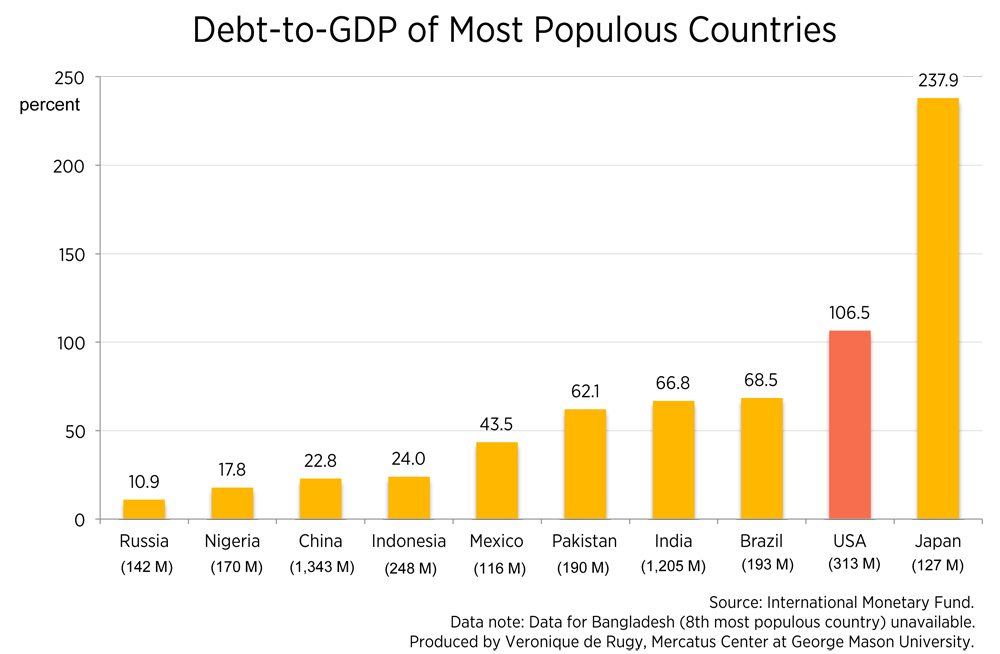
Debt to GDP of the most populous nations in the world:

https://www.mercatus.org/sites/default/files/CHART-large.jpg

Image result for national debt and gdp by country graph
It is as though the Japanese government imagines that borrowed money can be a substitute for a lack of people.

The "replacement rate" for fertility -- at which a population exactly replaces itself from one generation to the next -- is 2.1 children per family. The fertility rate in Japan is almost half of that.

https://apjjf.org/data/fig2.jpg

Image result for fertility rates by country graph japan
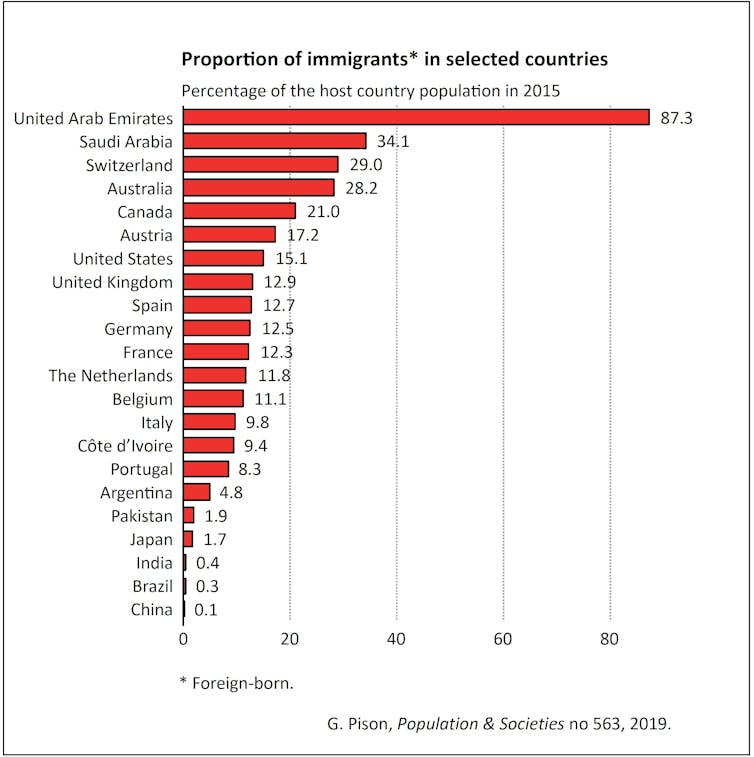
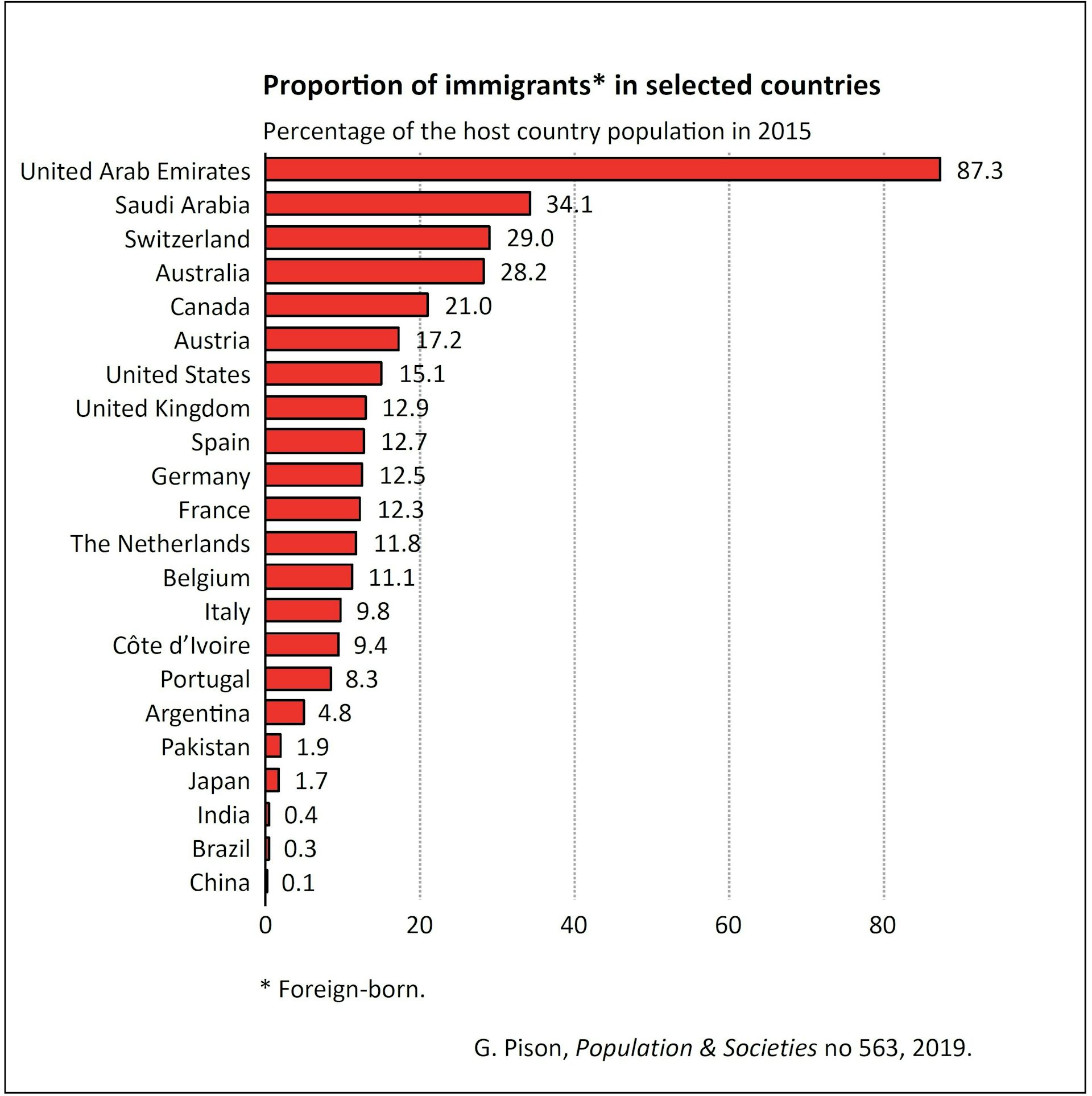
The immigration rate in the USA is 14%. That is, 14% of Americans are foreign born. That is one of the highest rates of immigration in American history.

The immigration rate in Australia is an astonishing 28 percent. Australia has not had a recession in 27 years because immigrants provide both a workforce and demand for goods and services. (The sore point of high immigration rates is higher housing prices and a fear of immigrants, especially Muslims.)

https://www.nytimes.com/2019/04/22/world/australia/immigration.html

By contrast, the immigration rate in Japan is a paltry 1.7 percent.

https://images.theconversation.com/files/264378/original/file-20190318-28468-em1hkc.jpg

Image result for immigration rates by country

"White swan" threats and collective amnesia
A black swan event is a catastrophe that nobody foresaw -- although after the event all sorts of "experts" chime on how it was obviously going to happen for whatever reasons.

https://en.wikipedia.org/wiki/Black_swan_theory
The black swan theory or theory of black swan events is a metaphor that describes an event that comes as a surprise, has a major effect, and is often inappropriately rationalized after the fact with the benefit of hindsight. The term is based on an ancient saying that presumed black swans did not exist – a saying that became reinterpreted to teach a different lesson after black swans were discovered in the wild.
A classic black swan event might be the bubonic plague that afflicted Europe in the mid-14th century. No one expected it then, although in retrospect, classic conditions existed for the Black Death to sweep through Europe:
  • globalization (the plague originated in Mongolia and spread with the Mongol conquest);
  • overpopulation in Europe (especially with dense cities and with people living near animals, either on farms or next to the wilderness); and
  • economic crisis caused by climate change.
Because the Black Death did happen and the conditions for it have been identified, another plague devastating humanity would not be a classic black swan event. Rather, a potential for a subsequent plague would be better described as a "white swan" threat in that it would be predictable because the conditions for a plague are now better known.

A white swan threat might remind us of the saying "Fool me once, shame on you; fool me twice, shame on me." Something unexpected and totally unpredictable once happened, and now we should know better. But people forget.

Interestingly, the conditions for the transmission of the plague that existed in the 14th century are widely expected to exist throughout the 21st century. Yet there is little discussion about or preparation for the possibility of a pandemic that might kill half the world's population within our lifetime. It would appear that white swan threats can induce collective amnesia.

Is the potential for Japan's collapse in 2020 also a white swan threat that is being overlooked? After all, Jim Rogers is not a fringe conspiracy theorist or a perpetually gloomy economist with a weird foreign name (Nouriel Roubini). Jim Rogers seems to be a totally positive and friendly American guy doing conventional, plain vanilla economic forecasting.

Jim Rogers' advice to Japan to allow more immigration does not seem to be gaining traction. Jim Rogers does give some advice to young Japanese to deal with their reduced prospects.
In 2017, he said on a financial podcast that “if I were a 10-year-old Japanese, I’d get myself an AK-47 or I’d leave” because of the country’s harrowing economic prospects.
What is Jim Rogers' advice for the rest of the world in terms of dealing with the impending economic and political collapse of Japan? Should we also buy AK-47s? How would a long economic depression change politics in Japan? The world has been afflicted by a wave of populism, nationalism and authoritarianism, yet after 30 years of stagnation, Japan has not succumbed to even a trace of anything like that. The reason for that might be that for almost 75 years in Japan, the conservative Liberal Democratic Party has had a monopoly on power and has institutionalized an elitist form of nationalism and authoritarianism. In the face of economic collapse, that ingrained ultra-conservatism might either prevent or promote the rise of fascism in Japan.

Nassim Taleb might offer some useful advice. Because we cannot predict a black swan event, Taleb argues that the best policy is to reduce vulnerability in general to prepare for potential unexpected catastrophes. For example, a low debt level is advisable because debt blows up in a crisis.
To prepare for a white swan event like the collapse of Japan, it might be imperative to reduce dependency on Japan. South Korea might have an inadvertent head start limiting its dependency on Japan. Because the two countries are now in a trade dispute, South Korea has been forced to consider alternative suppliers for its tech industry.

Two practical questions are suggested by the case of Japan's economic vulnerability:
In particular, How to reduce dependence on Japan?

More generally, as individuals and as a society, How can we reduce vulnerability?

Perhaps one of the greatest white swan threat today is the possibility of a oil price spike that could disrupt the world economy. The rise of oil prices to $147 per barrel in 2008 was a classic black swan event.

https://en.wikipedia.org/wiki/2000s_energy_crisis

Price of oil (2003-2008).png
Amnesia seems to have set in since 2008. The initiatives to shift to renewable energy that were launched in 2008 were aimed at achieving greater energy security. Since then, the campaign to shift to renewable energy has been appropriated by the discourse of "global warming". Moreover, the so-called "fracking revolution" in the US oil and natural gas industry has also fostered the collective forgetting of the imperative to adopt local, distributed generation in order to promote energy security. In sum, liberal rhetoric and American ingenuity have together diminished the sense of urgency that existed in 2008 across the political spectrum that an energy transition was necessary for state security. However, periodic crises can trigger a collective remembering of white swan threats. In the face of a threat to the oil supply, people will -- temporarily -- remember that local generation is more safe and reliable than imported energy in any form.


https://www.wsj.com/articles/saudi-oil-attack-this-is-the-big-one-11568480576?mod=rsswn